
Oak Wilt Risk Tolerance Considerations
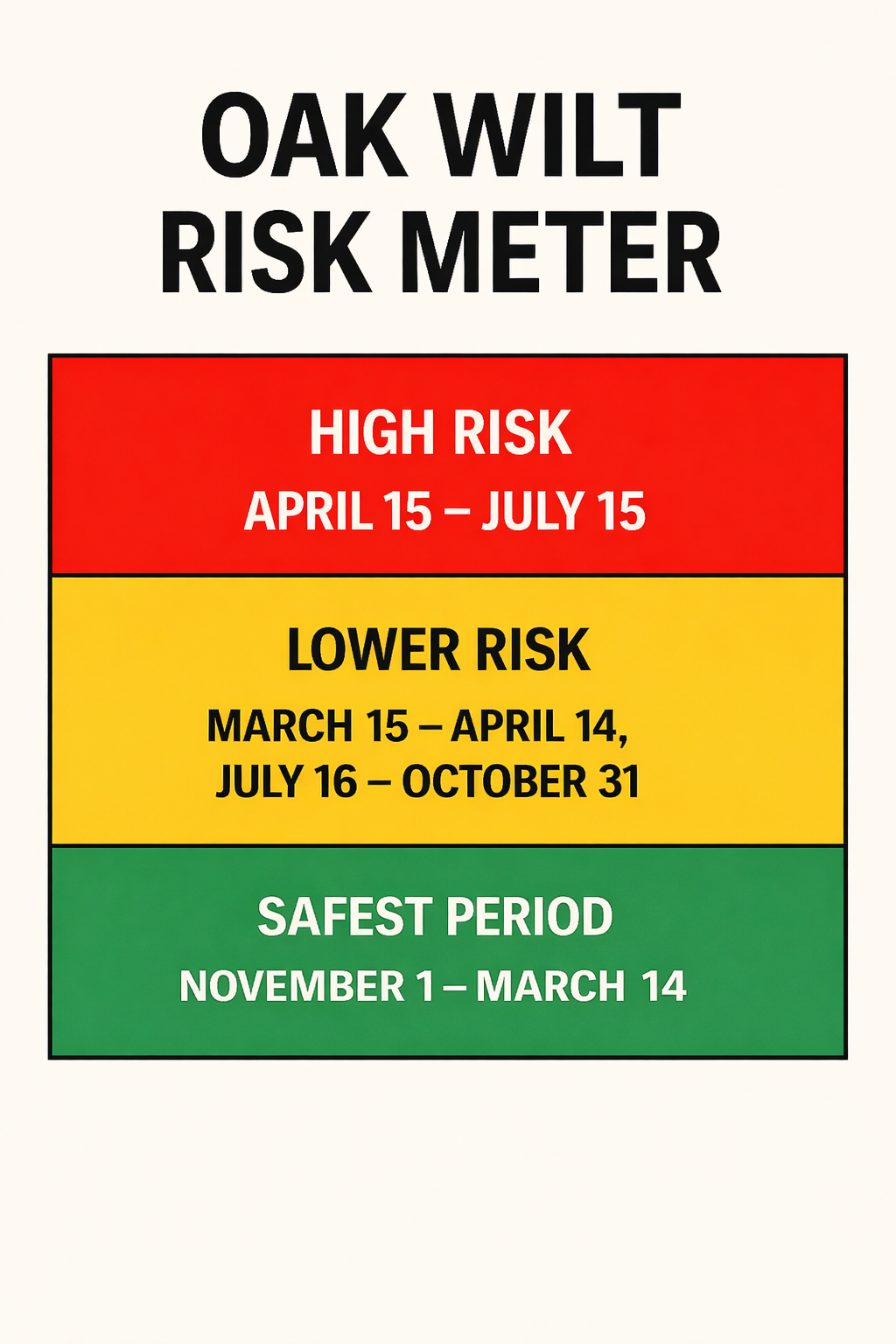
Oak wilt infections can occur whenever oaks are wounded from April through October, with the Greatest Risk Period between April 15 and July 15.
Outside of this window, conditions may vary and can increase or reduce risk depending on your location, site conditions, and management tolerance.
Use the considerations below to evaluate the level of risk for your property.
1. Know Your Local Disease Pressure
The closer your site is to confirmed oak wilt infections, the higher your risk.
More disease presence = more disease pressure.
Helpful resources include:
Oak Wilt Viewer Map (look for “Oak Wilt” layer to see distribution across the landscape)
Local Oak Wilt Qualified (OWQ) Specialists
Forestry Assistance Program (FAP) Foresters
MSU Extension (for guidance on local disease activity)
2. Feasibility of Oak Wilt Treatment
Oak wilt management often requires trenching, tree removals, and site access.
Certain site characteristics may limit or influence treatment options.
Potential limitations include:
Site access restrictions
Utilities (above or below ground)
Property boundaries
Infrastructure (buildings, septic systems, paved areas)
Site disruption tolerance
Topography
Soil type
Ecological considerations
Archaeological or cultural resources
Land-use type
Other site-specific constraints
3. Financial Considerations
Oak wilt management can involve multiple costs, including:
Diagnostic testing
Tree removals
Site remediation
Ongoing monitoring
Professional consulting and implementation
These costs can influence your overall risk tolerance and management decisions.
4. Site Vulnerabilities
Consider potential ways oak wilt could reach your property, such as:
Infected firewood brought onto the site
Adjacent utility corridors or right-of-way management, which can create repeated fresh wounds
Other nearby sources of oak injury or disease introduction